Partnership spotlight: TRTP
There's a number you need to see before we get to the partnership news: $24 million.
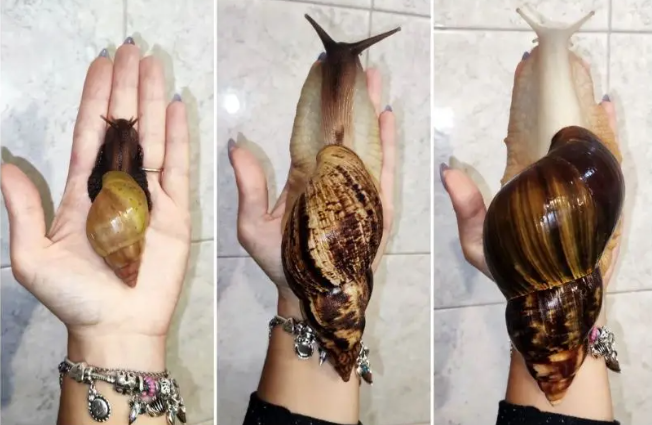
Woman holds her three giant African snails in her hand © Courtesy of @maca_dream, Instagram
That's what Florida has spent fighting infestations of the Giant African land snail: not once, but across three separate campaigns since 1966. Each one, more expensive than the last. Each one, fought without a standardized, validated containment tool to work from.
Regulated terrestrial mollusks become agricultural crises because of what hasn’t yet been built: the education, the containment infrastructure, and the validated standards that would let communities treat them as the resource they actually are rather than the emergency they keep becoming.
EscarGrow was built to solve that problem. It is a sealed, APHIS-compliant containment and monitoring system that teaches operators how to farm snails safely, generates the data regulators need to establish containment standards, and moves heliciculture from a niche that people fear into infrastructure that communities can rely on.
Tar River Trading Post (TRTP) has joined Helical Healing Habitat in solving for the absence of a proven exclusion-and-monitoring system for regulated terrestrial mollusks.
Let's go North Carolina!
From their base in Youngsville, TRTP is joining EscarGrow's field validation effort: contributing laboratory infrastructure and a decade of hands-on experience with contained biological systems to the project's North Carolina deployment site.
The field currently lacks a quantitative dataset on containment performance and escape incidents for regulated terrestrial mollusks. TRTP is helping HHH build it. That dataset feeds two deliverables:
A standardized exclusion-and-monitoring protocol: generalizable across regulated mollusk species, structured to inform how USDA APHIS and state agricultural partners approach containment verification going forward.
A manufacturing-ready engineering package: the design-for-manufacture specifications that move EscarGrow from working prototype to a system producible at scale.
This is regulatory work, built around the APHIS containment framework from the ground up, in a pest category where no validated standard currently exists. When that standard is in effect, snail farming stops being something regulators have to fight and starts being something communities can build on.
Why Tar River?
TRTP has spent over a decade manufacturing and distributing some of the most thoughtfully engineered products in the sustainable-living space — contained composting systems, biological waste processors, solar digesters. Their team brings a lifelong background in sustainability and ecology, and a consulting practice built on helping landowners put real, functional systems in the ground.
Familiarity with sealed biological containment hardware isn't a credential you can fake. A validation study is only as strong as the partners running its field sites — and a prevention tool is only as credible as the education and data behind it.
$24 million knowledge gaps don’t close themselves.
