Slowest livestock. Smartest bet.
Our mission at Helical Healing Habitat is to introduce you to the wild and wonderful world of snails, through the practice of heliciculture (snail farming). Let’s begin with a snapshot of the snail market:
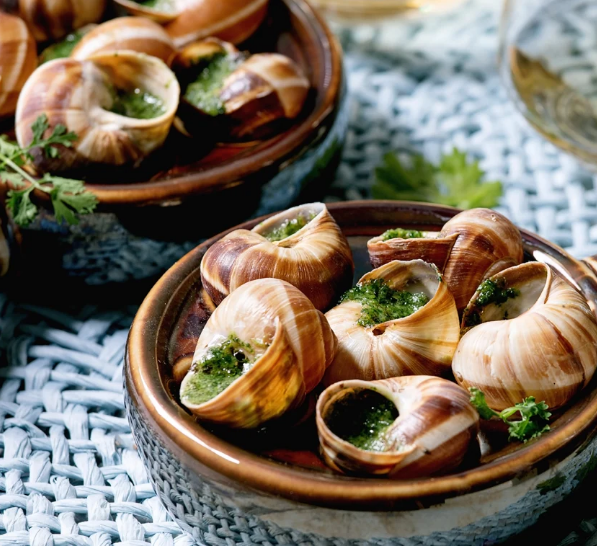
Snail caviar: Costs between $100 and $225 per 1.7 oz tin, or roughly $2,000 to $3,000 per kilogram. [1, 2, 3]
Edible snails: Annual direct imports hover near $3 million, with top consumers including French, Vietnamese, Mexican, and Nigerian communities. [4]
Fresh or In-shell farm-raised: The U.S. imports hundreds of tons of edible snails yearly. Average prices run around $40 to $60 per pound.
Global snail mucin size: The worldwide market value for snail mucin skincare sits at approximately $1.09 billion. [5, 6, 7]
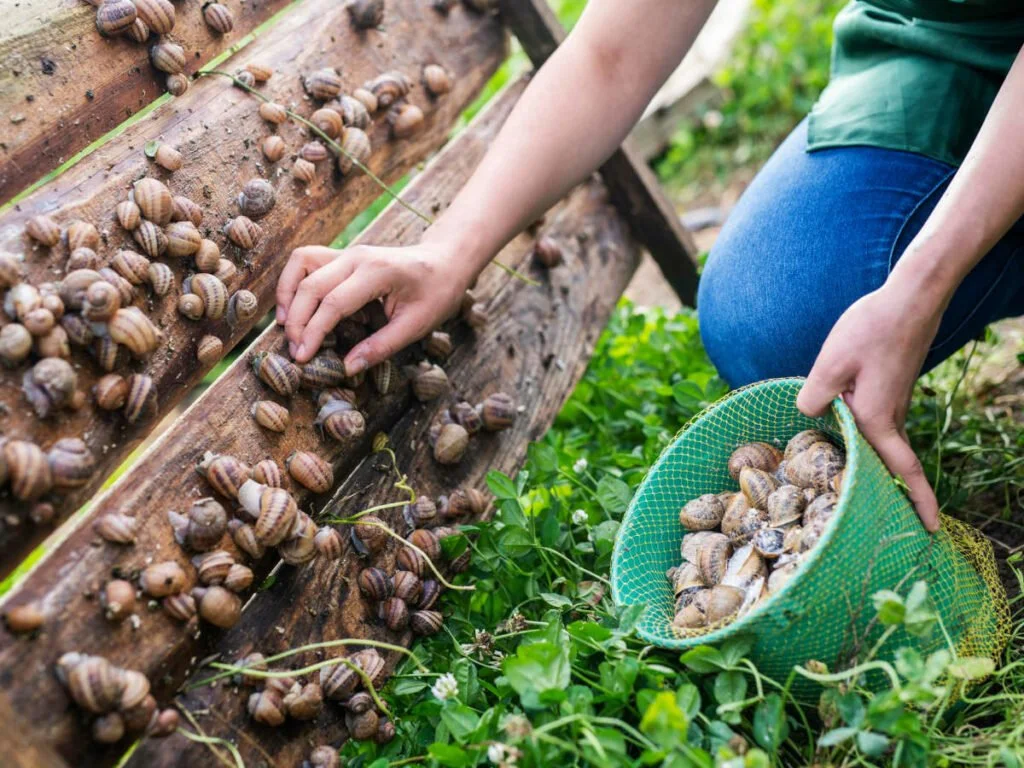
Snail slime is worth more per kilogram than silver.
Did you know that ethically-extracted, high-purity freeze-dried snail mucin has sold for as much as $58,200 per kilogram. Silver, for comparison, is $2,100/kg. A garden gem that most people get rid of is quietly outperforming one of the most valuable materials on the planet.
That fact made us stop treating heliciculture (snail farming) as a quirky side hustle and start treating it as a real business. We're building the technology to farm it properly, and we're looking for the partners who want to build it with us.
Wait, slime is a whole industry?
Yep! And it's not the only one. Snail farming actually intersects four growing markets:
Food: Escargot is a genuinely global commodity — roughly 450,000 metric tons of edible snails move through markets worldwide every year. France alone eats about 30,000 tons of it annually and lists escargot on more than 25,000 restaurant menus. It's also just good protein: 16.5 grams per 100 grams, under 1.4 grams of fat.
Biological products: Mucin: the skincare ingredient K-beauty brands like COSRX and Dr. Jart+ built entire product lines around. The snail mucin skincare market is valued around $1.09 billion right now and is projected to keep climbing. And that $58,200/kg figure above is the ceiling of a supply chain where bulk commodity powder sells for pocket change and true high-purity, traceable extraction sells for a fortune. That gap is basically an invitation.
Fertilizer: Every animal that eats, also doesn't keep all of it. Snail castings (helicrap) are nitrogen-rich, and the closest comparable category (insect frass biofertilizer) is valued at up to $2.5 billion and growing north of 12% a year as regenerative agriculture goes mainstream. USDA field trials have already shown invertebrate castings matching conventional fertilizer yields while improving soil carbon. Waste, it turns out, is a business line.
Caviar: Snail roe (sometimes called "Aphrodite's Pearls") retails for $1,500 to $3,000 per kilogram, historically at price parity with actual Beluga caviar. A single snail lays about four grams of eggs a year, so this will never be a volume play. It is, however, an incredible dinner-party story, and a genuinely premium product for the right operator.
Four markets. One animal. Most farms are only set up to capture one.
Snails are also a climate story
Producing a kilogram of snail meat is estimated to emit around 0.7 kg of CO₂. Compare that to 5–6 kg for poultry and up to 18 kg for beef.
Snails don't need much water, they're fine on low-grade feed including vegetable byproducts, and they don't need a feedlot. They're basically the animal protein industry's best-kept secret — mostly because nobody's built the infrastructure to farm them at real scale.
Meet EscarGrow: Snail farming, contained
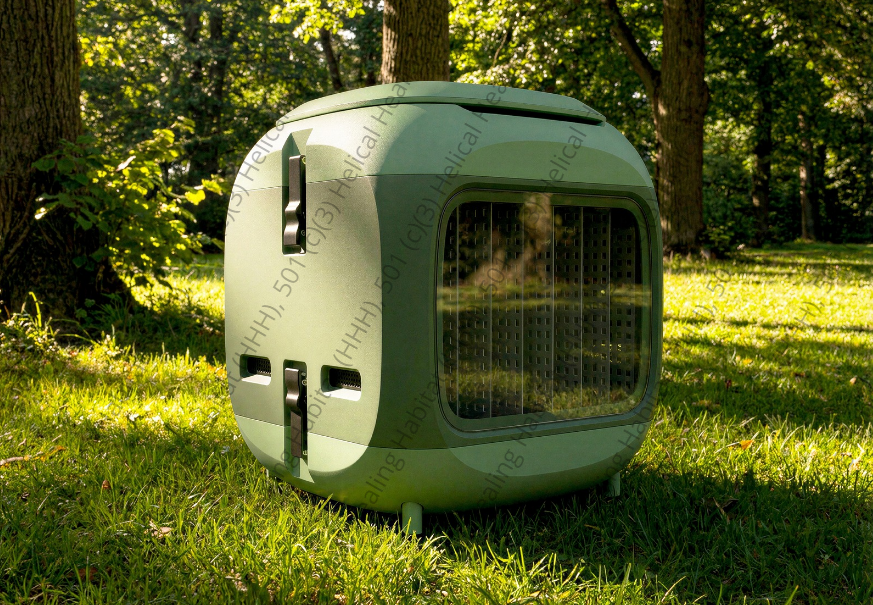
EscarGrow Mini: Invented by Ozi Manning, and modeled by Oleg Vereshagin
Here's the plot twist (in the U.S. market, specifically) about the common garden snail (Cornu aspersum). The species virtually all heliciculture depends on is classified by USDA APHIS as an invasive pest.
That means live sales are restricted, interstate movement needs permits, and any farm has to prove containment before it can scale.
Most people see that as a wall. We see it as a design brief.
EscarGrow Pro and EscarGrow Mini are patent-pending, fully sealed bioreactor systems built around containment from day one — not retrofitted onto an open-air pen after the fact. Mini is the compact, countertop-scale entry point: built for hobbyists, classrooms, and Farmer Certification Program trainees who want to learn the craft before they scale it. Pro is the production workhorse: a vertically-stacked module designed for certified operators running real farm output.
We'll be straight with you, because that's the only way we know how to run this. As of today, EscarGrow is currently at the 3D prototype stage.
No units have been manufactured or sold yet, and we haven't locked in a production manufacturer. We were named a nominee in the 2026 EarthShot Prize, which tells you the idea has real traction — but the hardware itself is still being built, and we think that's exactly the moment for the right partners to get in.
A quick word on what we won't farm
If you've read this far, you deserve the full picture, including the cautionary tale. The Giant African Land Snail is federally prohibited in the U.S. because it's an aggressive agricultural pest and a documented carrier of a parasite that causes meningitis in humans. Florida has spent over $24 million eradicating infestations traced back to the illegal pet trade.
We mention this because it's exactly the kind of detail a careless operator skips and a serious one leads with. EscarGrow works exclusively with legally permitted species. No exceptions, no gray areas. If you're evaluating us as a partner, that's the muscle you're actually buying into.
So, who are we fooking for?
Honestly, a few different kinds of people:
Manufacturing partners: who want to take EscarGrow to first production run.
Investors: who like the idea of a multi-vertical hardware business (food, cosmetics, fertilizer) at the ground floor.
Farm operators and landowners: ready to integrate heliciculture into their operations.
Distribution and offtake partners: cosmetics brands, culinary distributors, specialty grocers for a traceable, U.S.-based, ethically-produced supply chain in a category currently dominated by imports.
Institutional and grant partners: who care about the education and workforce-development side of this just as much as the commercial side.
If any of that made you sit up a little — great. That's the reaction we had the first time we saw the mucin numbers too.
Want the full data behind these numbers? The prospectus is open.
