
Hot aisle harvesting
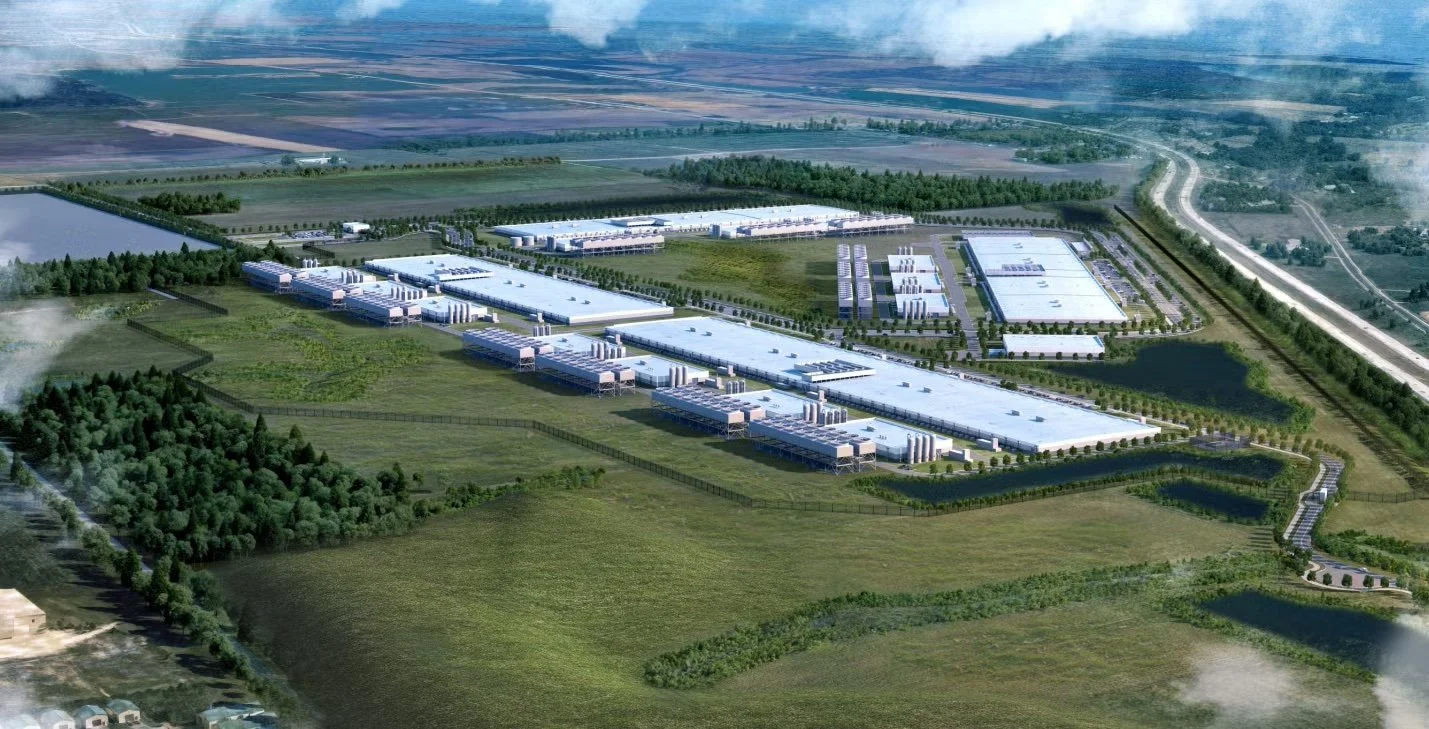
This is an aerial rendering of what the planned data center campus in Port Washington could look like. Source: City of Port Washington
In the current climate tech landscape, we are obsessed with the “methane bomb”—the millions of tons of organic waste rotting in landfills. However, there is another, invisible liability heating our atmosphere: residual industrial heat.
As the backbone of our digital existence, data centers consume massive amounts of energy, generating immense thermal waste that is traditionally vented into the sky as a liability. At Helical Healing Habitat (HHH), we have reframed this. It is not a cooling problem; it is a thermal asset.
The myth of sterility vs. the strength of symbiosis
For decades, the data center industry has been governed by the myth of sterility—the idea that hardware must exist in a vacuum, isolated from biological life. But sterility is fragile; it requires immense energy to maintain and offers zero fallback when the grid falters.
We argue that symbiosis, not sterility, is the only resilient strategy for 2026. By integrating the EscarGrow Thermal system—our high-tier industrial bioconversion engine—directly into the cooling infrastructure of Tier 1 facilities, we replace energy-intensive mechanical cooling with a functional biological thermal sink.
Mitigating the livestock collapse
The reality of 2026 is a rapid decline in legacy cattle livestock due to historic droughts and shifting land-use regulations. This is no longer just a "green" issue; it is a food security threat. Data centers, as the largest concentrated producers of stable thermal energy, are uniquely positioned to mitigate this collapse.
While traditional livestock requires vast acreage and millions of gallons of water, our bioconversion hubs thrive in the "Goldilocks Zone" of server exhaust (80°F–115°F). Here, the EscarGrow Thermal tier utilizes waste heat to accelerate the processing of institutional food waste into drought-resilient protein and medical-grade mucin—requiring 90% less water than legacy agriculture with a zero-methane footprint.
Closing the loop: industrial symbiosis in action
Through this integration, we achieve three critical breakthroughs in restorative infrastructure:
Zero-Cost thermal management: We eliminate the energy costs for year-round heliciculture by rerouting "hot aisle" exhaust. We are powered by the very heat the facility is currently paying to remove.
Data-driven decarbonization: Through the MyEscarGrow technical ledger, we provide audit-proof metrics for methane avoidance. We transform an energy-intensive facility into a carbon-negative utility.
Biosecurity by design: Our hubs are engineered as IoT-monitored "biological vaults." They operate independently of the facility’s ambient air, ensuring zero risk to sensitive hardware while providing a functional thermal sink for the building.
From digital waste to community wealth
This is the value capture gap in action. By plugging into the digital economy, we ensure that the technology consuming the most energy is the very thing powering the production of regenerative fertilizer and gourmet protein.
We are moving past "sustainability" and into the strategic infrastructure standard. When we pair the efficiency of the silicon chip with the 500-million-year-old wisdom of the snail, we create a resilient, self-sustaining network. The future of the circular economy isn’t just in the soil; it’s in the server room.
References:International Energy Agency (IEA): Data Centers and Data Transmission NetworksUtility: Provides the 2026 global baseline for data center energy consumption and the urgent need for PUE (Power Usage Effectiveness) optimization.
Journal of Cleaner Production: Waste Heat Recovery in Data CentersUtility: Technical validation for "Thermal Sinks" and the efficiency of rerouting server exhaust into secondary closed-loop systems.
The Ellen MacArthur Foundation: Completing the Picture: How the Circular Economy Tackles Climate ChangeUtility: The definitive framework for "Industrial Symbiosis," supporting HHH's mission to transform liabilities into assets.
EPA (Environmental Protection Agency): Inventory of U.S. Greenhouse Gas Emissions and SinksUtility: Provides the methane-generation data for organic waste in landfills, justifying the "Methane Bomb" terminology.
California Department of Resources Recycling and Recovery: SB 1383 Organic Waste ReductionUtility: The legal benchmark for "Zero Waste" mandates and the reporting standards HHH's SaaS platform must meet.
Intergovernmental Panel on Climate Change (IPCC): Special Report on Climate Change and LandUtility: Global data supporting the necessity of drought-resilient protein and decentralized agriculture to ensure food security.
Food and Agriculture Organization of the UN (FAO): Edible Insects & Low-Impact ProteinsUtility: While focused on insects, this repository contains the benchmark data for "Alternative Proteins" and Feed Conversion Ratios (FCR) that support the 1.5:1 ratio of heliciculture.
The Snail Mucin Market Forecast (2024–2030): Global Market InsightsUtility: Supports the economic argument for the high-margin "Value Capture" of pharmaceutical-grade mucin in the 2026–2030 cycle.
Water Footprint Network: The Green, Blue, and Grey Water Footprint of Farm AnimalsUtility: Direct comparison data showing that heliciculture uses 90% less water than traditional bovine or porcine livestock.
Data Center Dynamics (DCD): The Future of Heat ReuseUtility: Current industry reporting on "District Heating" and the move toward data centers acting as localized "Heat Utilities."
NREL (National Renewable Energy Laboratory): Efficient Data Center CoolingUtility: Technical specifications on cooling loops and "Liquid-to-Air" heat exchange, supporting the biosecurity of HHH's closed-loop hubs.
