
How it works: The fallback system
HHH operates a network of decentralized snail bioconversion hubs — EscarGrow™ — that transform two common institutional liabilities (organic food waste and exhaust heat) into three localized assets (protein, fertilizer, and climate data). Here's the full cycle.
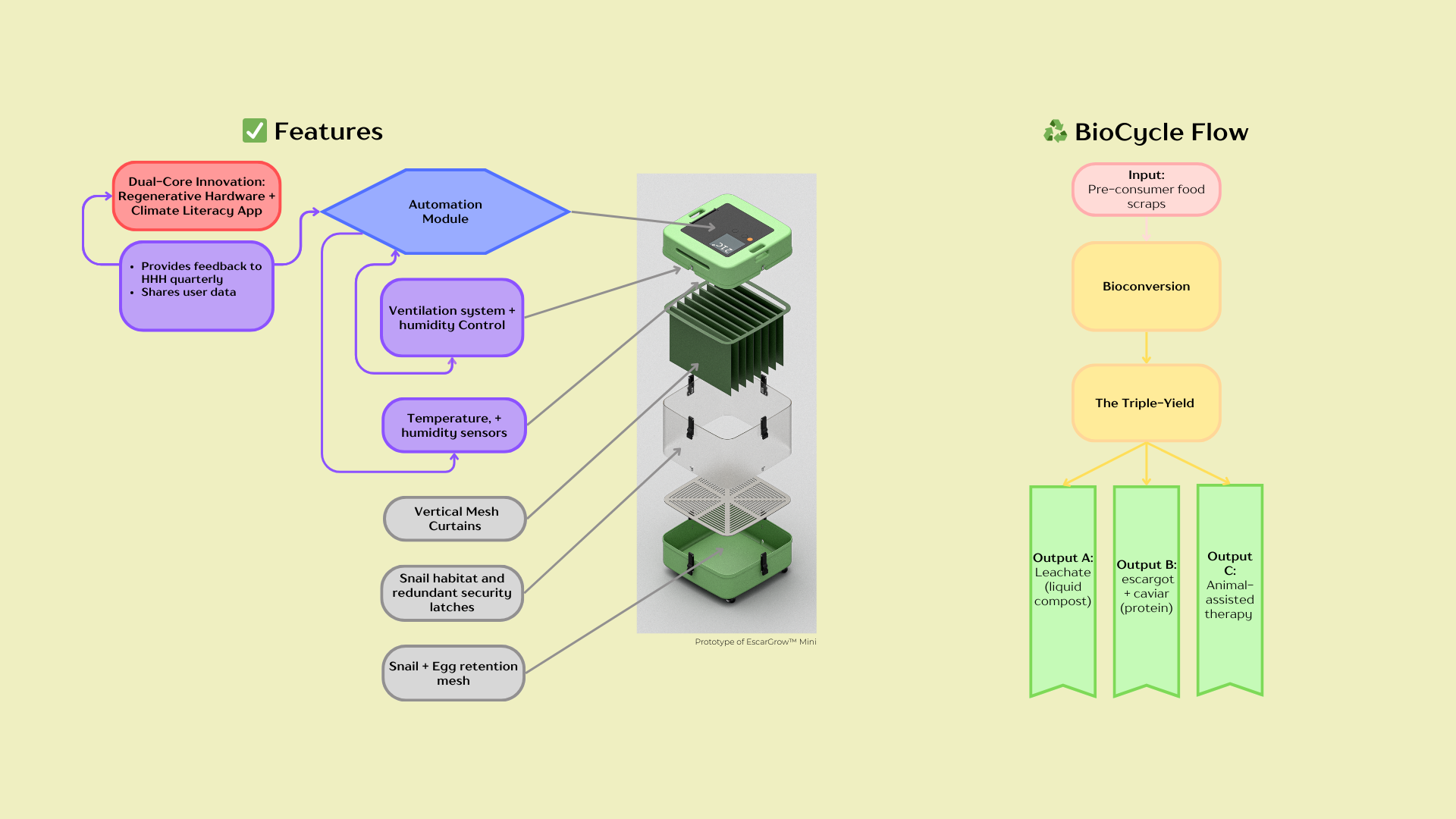
Schematic of EscarGrow MiniSTEP 1 — ASSET CAPTURE (The Input)
We begin by identifying what institutions already have and are paying to discard.
Organic waste from school cafeterias, hotel kitchens, hospital food service, and restaurants is collected before it enters the waste stream. In the U.S., food waste is the single largest category of material in landfills, where it decomposes into methane — a greenhouse gas roughly 80 times more potent than CO₂ over a 20-year period.
Thermal waste from data center server rooms and industrial cooling systems is captured as a secondary heat source. Server "hot aisles" typically exhaust air between 80°F and 105°F — within the optimal metabolic range for snail production — and most facilities currently pay to dissipate this heat.
Both inputs are intercepted at the source and redirected into the EscarGrow™ system.
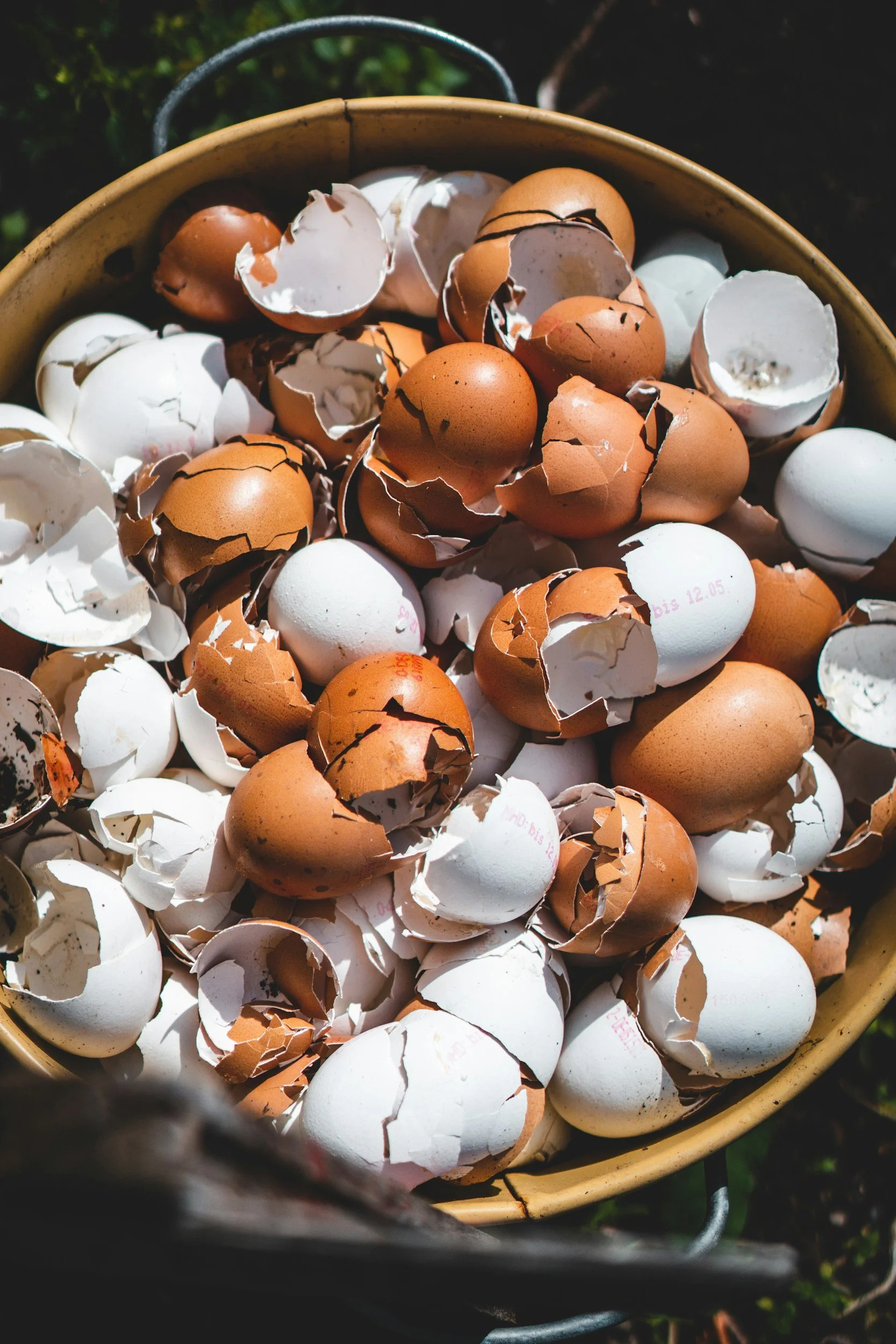
STEP 2 — THE BIOLOGICAL ENGINE (The Conversion)
Inside each EscarGrow™ hub, snails convert organic feedstock into biomass with a feed conversion ratio of approximately 1.5:1 — meaning 1.5 lbs of organic input produces 1 lb of snail biomass. For comparison, cattle require roughly 6 lbs of feed per pound of beef.
Where a thermal source is available, it maintains the enclosure's temperature passively, eliminating the energy cost of climate control. This is the core of our industrial symbiosis model: the data center's waste becomes the farm's energy source.
The MyEscarGrow IoT platform monitors the system continuously — tracking feeding cycles, growth rates, waste inputs, and system health. All data is logged and available to site operators and partner institutions in real time.
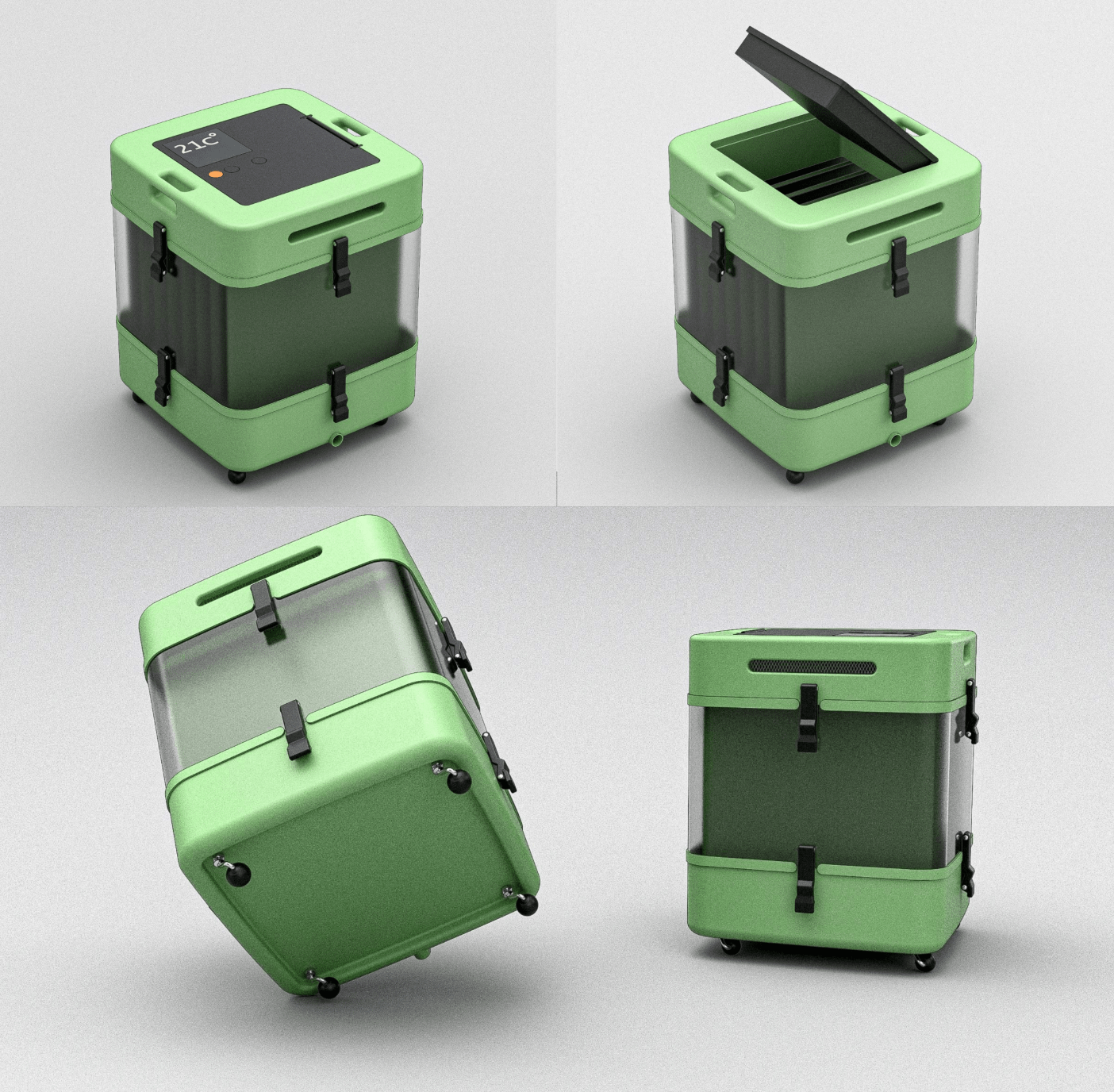
EscarGrow MiniSTEP 3 — THE TRIPLE YIELD (The Output)
Each EscarGrow™ hub produces three distinct outputs, all of which remain in the local economy.
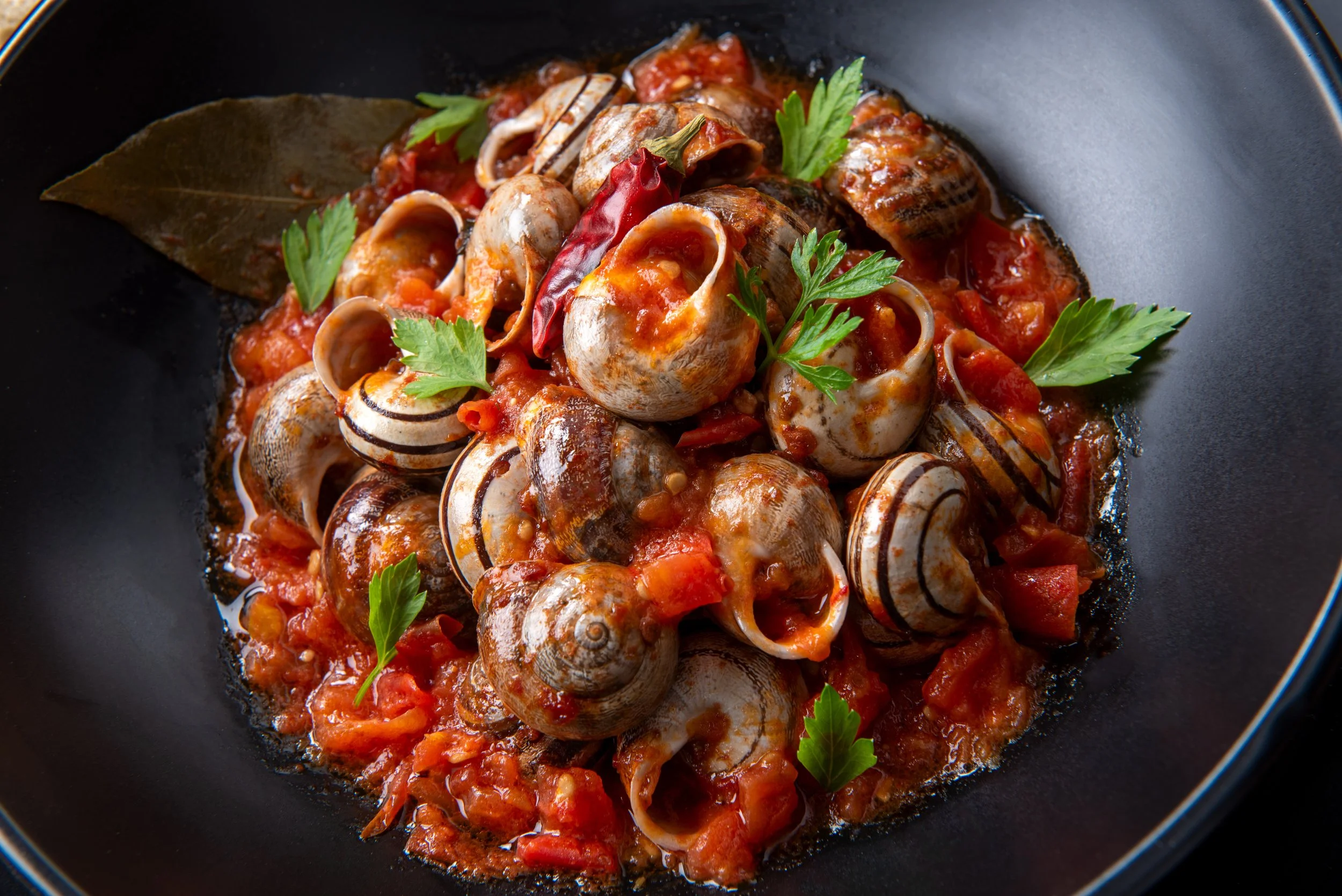
Bio-assets: Harvested snails are processed into gourmet protein for regional food markets and cosmetic-grade mucin for personal care and pharmaceutical applications. Snail mucin is an active ingredient in skincare products with a growing domestic and international market — and there is currently very limited domestic production of lab-verified supply.

Regenerative input: Snail frass is a pathogen-free, nitrogen-rich organic fertilizer. We route it to urban agriculture partners, ranchers restoring degraded soil, and school gardens — creating a direct, local nutrient loop.

Climate data: The MyEscarGrow platform generates a record of waste diverted, methane avoided, and thermal energy recovered. This data supports ESG reporting, sustainability compliance, and — as we build toward third-party verification protocols — carbon-credit documentation.
STEP 4 — COMMUNITY RESILIENCE (The impact)
The system's design principle is localization. Protein production, soil amendment, and climate data generation happen at the site where the waste was created — shortening the supply chain and retaining economic value within the community.
We train local operators — including students, women, and workers in under-resourced communities — to manage EscarGrow™ hubs as skilled technicians. This creates a workforce capable of running the infrastructure of a circular food system: reading biological data, managing living systems, and maintaining the documentation that makes climate assets bankable.
We call this the fallback system: a network of small, resilient, locally operated production nodes that function independently of centralized supply chains and long-distance logistics.
"You never change things by fighting the existing reality. To change something, build a new model that makes the existing model obsolete."
—Buckminster Fuller