America has ~3 Weeks of oil reserves left
There is an elephant in the room—actually, there are four. They've been there for years, and we've all gotten very good at not looking at them. The Strategic Petroleum Reserve is at a 40-Year low. Have you considered what that means for your dinner?
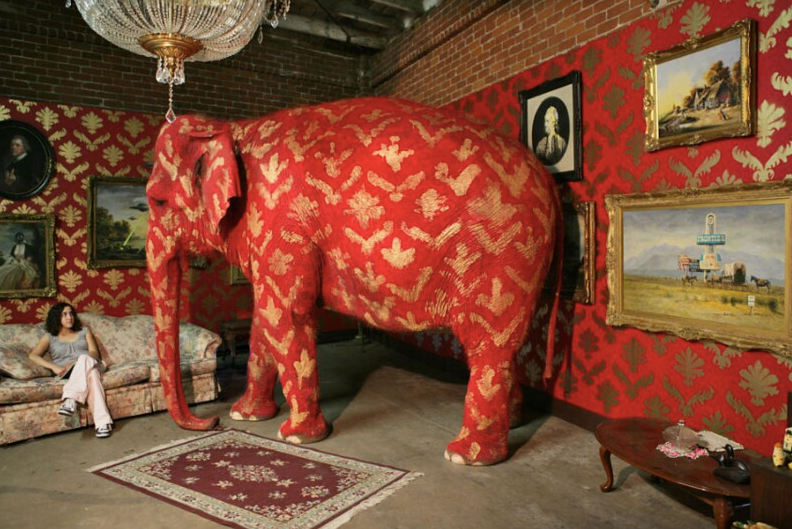
“There is an elephant in the room. Twenty billion people live below the poverty line.” ~Banksy
We talk about climate change. We don't talk about the things in our own schools, kitchens, and workplaces that influence it. So let's name them.
Elephant #1: Our oil reserves are nearly empty.
As of mid-2026, the U.S. Strategic Petroleum Reserve (our country's emergency oil stockpile) holds approximately three weeks of crude oil at national consumption rates. That's the lowest level in four decades. And we're still drawing it down.
This matters even if you never put gas in your car. The synthetic fertilizers that keep American agriculture running are made from natural gas. The food you eat depends on a fossil fuel supply that is visibly tightening.
Elephant #2: We throw away food like it's free.
The United States discards roughly 60 million tons of food every year (about 30 to 40 percent of everything we grow). That food is worth over $218 billion. We pay to grow it, ship it, refrigerate it, and then we pay again to throw it out.
Elephant #3: Our schools don’t teach alternatives.
K-12 schools in the U.S. throw out approximately 530,000 tons of food every year (most of it never even served). The annual cost: $1.7 billion. The annual lesson taught to students: food is disposable.
Elephant #4: Climate change is being argued in the wrong room.
The biggest climate conversations happen at oil refineries, utility-scale solar farms, hydrogen pipelines that haven't been built yet. They're important. But the kid who will live through 2070 has never seen a closed-loop system in real life. They learn about climate from chromebooks and headlines. They don't learn how it actually works.
The initiative
We’ve launched a 20-acre regenerative farm in Farmersville, Texas. Texas faces fertilizer fragility, soil depletion, water scarcity, and educational underinvestment in Title I districts (climate adaptation challenges compressed into a single geography). A working farm here, building a replicable model, was the most honest place to begin.
On that land, we breed Cornu aspersum. The heritage French snail. Naturalized in Texas soil for over 150 years. Escargot is a heritage food across Nigerian, Haitian, Vietnamese, Ghanaian, Creole, and French traditions. A small, slow animal that does extraordinary work:
It eats pre-consumer food waste: the same waste that becomes methane in landfill.
It produces frass and leachate: premium soil amendment that replaces fossil-fuel-derived fertilizer.
It restores soil through regenerative practices that sequester carbon.
It teaches the next generation what a closed-loop system actually looks like (by letting them operate one).
Our patent-pending EscarGrow system brings this into classrooms, community sites, and homes. Sealed. School-safe. Sized for a kitchen counter.
This is climate adaptation at the scale of a kid's desk. We've all been standing in the same room. We've all been ignoring the same elephant. We can change what we do next. Be sure to check in to RSVP for our weekly info sessions.
3 ways you can join us
🌿 Donate: Tax-deductible. Funds EscarGrow deployment, paid apprenticeships, and educator training. Every dollar moves the work forward.
📤 Share this post: Send it to one educator, one farmer, one parent, one funder. The most important thing about the elephants is that people stop pretending they're not there.
🤝 Join us: Volunteer. Apprentice. Become a Zone Partner. Host a pilot site.